In this funny story by one of the country’s most exciting new authors, a dog becomes a cooking sensation.


Jan said Japan was where the money was, so that’s where we went—Tokyo, to be exact. She rented a penthouse in Akihabara, done up in blonde wood and gleaming chrome. The owner gave me a discount in return for selfies with my dog, Porcini.
We spent our days endorsing steak knives, Thermomixes and delousing shampoos. Photo shoots and promo videos, guest spots in film clips for J-pop bands, drop-ins with reality TV stars: men in silver suits and women in puffy, vaguely Bavarian costumes. I smiled and nodded as the production staff swirled around me.
Jan attached a GoPro to Porcini’s collar and set up a subscription service called A Dog’s Life, which streamed his life to his adoring fans. I never understood what possessed people to fork over ten dollars a month to watch close-ups of Porcini’s dinner being wolfed, the darkened apartment as he slept, but fork they did.
Two months in, Porcini began losing weight. He turned his nose up at wagyu steaks, quivering cubes of tuna. Besides the occasional bowl of kibble, he spent all day on his blanket, licking his arsehole. Subscriptions were down and so was Jan.
—Is he depressed? Jan asked. Have you been mistreating him?
—Do I even need to dignify that with a response?
—Well, yes, if you wouldn’t mind. Dignify away.
My job, if that was the right word, was simple: I fed Porcini and took the photos Jan suggested. My bank account swelled like a blood-filled tick, but I was finding it harder to get out of bed in the morning. One day I decided to take control. I did ten sit-ups and called Jan.
—I want to be more involved. I want to connect with my fans.
—Your fans?
—Ours. His.
—Fans can be tricky. Unpredictable. You know that saying about meeting your heroes? Well, it goes the other way too.
I could hear Jan breathing down the other end of the line.
—I want to meet people. Real people.
—But you’re not a real person. Not anymore. And the sooner you realise that the better.
—I want the passwords to the Instagram accounts.
—Now let’s not do anything rash. I’m coming over.
She did, all the way from LA. We started on beer, then switched to whisky. She was plying me to weaken my resolve.
—You are the owner of the most famous dog on the planet, Jan hissed. Porcini is your meal ticket, your gift dog, your manna from canine heaven.
But I stood my ground, and eventually she relented. If involvement I wanted, involvement I’d get.
A few days later, I met the inaugural winner of the Pals of Porcini competition, an ESL teacher named Kaitlin, who’d been selected to meet my dog from his 7.7 million Instagram followers. She trembled on my welcome mat in charcoal activewear, her hair dyed a silvery orange. Porcini was asleep on the same tatty blanket I’d taken him home in half a decade earlier. She crouched and hovered her hands above his brindle coat.
—Look at him. Look at him.
I took some photos, but she looked overwhelmed—not good content-wise. I clapped my hands and Porcini began to stir, yawning and licking his chops. Finally he sat up and offered his chin to Kaitlin, which she proceeded to chuck as she murmured solemnly:
—Kawaii. Kawaii.
We smoked on the balcony, looking down at the people moving far below on Chuo Dori. Kaitlin had been following Porcini from the beginning, liked all his photos, watched his videos, bought his cookbooks. Silly as it sounded, Porcini held an important place in her heart, she told me. He was a symbol of all that was good in the world.
Porcini is your meal ticket, your gift dog, your manna from canine heaven.
Kaitlin was from Ann Arbor, a university town an hour’s drive from Detroit, raised by her mother, Jill, a receptionist at a doctor’s office. They got along well enough, though Jill drank from the moment she got home from work until she passed out on the living room couch. Kaitlin often found her mother in the bathroom, doubled over from the pain in her kidneys.
Eventually Jill decided to give up the booze for good. Kaitlin stayed up with her on those wintry Michigan nights to keep her running to the liquor store. They bought a staffy from the pound, Bruno, a wimp of a thing. They played with him for hours at a stretch, tickling and hugging, smelling the top of his head.
Jill seemed happier, though she worried about the dog. It had terrible separation anxiety, whining pitiably whenever they left. She began driving home during her lunch breaks to spend a few minutes with him. One time Kaitlin got home early from school and discovered her mother asleep on the couch with Bruno whining beside her. Careful not to wake her, Kaitlin tiptoed through to the kitchen and rifled through the cupboards and the trash, looking for empty bottles, but couldn’t find any.
Two weeks later, Kaitlin got the call from the hospital. Jill had been in a car crash on the drive back to work. She was in an induced coma with a blood-alcohol level three times the legal limit. Later Kaitlin found the vodka bottles at the back of her mother’s closet. Her mother’s concern for Bruno had been a cover to drink without Kaitlin knowing. While she waited for her mother to wake up, Kaitlin found she couldn’t bear the sight of the dog, and eventually sent him back from whence he’d come: the pound.
After Kaitlin left, I padded around the apartment, eating mechanically from a bag of yoghurt pretzels. I locked myself in the tiny, grey-tiled bathroom. Porcini followed me everywhere, slinking between my ankles, streaming my image to strangers around the world. The toilet was the one place I got to be alone. It was low to the ground, and I always made a mess when I stood to pee, but when I sat there was nowhere to put my legs. I usually went in the shower. While washing my hands my phone buzzed; more messages from Adam Driver.
—I’ve been working on my accent.
He’d sent a few audio files.
—Bloody hell! What’s the dog doing at the stove? Adam squawked in a broad Australian brogue.
I sent him a thumbs-up without listening to the rest. He was one of Jan’s clients. She had brokered the deal to option my life.
—Adam has big ambitions, she told me. He wants to direct, produce, innovate.
A few weeks after the meeting with Kaitlin, we were booked to appear on the most popular cooking show in Japan. I decided on yakisoba for the dish, the most complex we’d ever attempted. In preparation, every morning I’d set out the ingredients on the apartment floor, next to a wok on a hotplate. I’d mime the motions Porcini needed to perform, and he’d wag his tail and lick my hand with fat, dumb love. He’d set to work with a paring knife between his nimble paws, but he couldn’t seem to get the ratios right: he used too much pork, he overcooked the noodles, the balance of soy and ginger was all wrong. I worried I was overextending him, that it was a dish too far, but he seemed to relish the challenge, his torpor disappearing the longer he spent at the stove. He so desperately wanted to impress me, to be the good boy, to wring out what little love I had.
One morning I found Porcini alert next to the wok. He was ready.
—I am quivering with excitement, my dude, said Adam Driver, Zoomed in from the kitchenette. I’m beyond quivering.
I put the ingredients on the ground and Porcini got to work. He diced the vegetables into spears, sliced the pork fingernail-thin and dumped the food into the wok shimmering with oil.
I called Jan with the news.
—This is the sound of me kissing, she said. Consider yourself kissed. I drank celebratory Kirin after celebratory Kirin. I high-fived Adam Driver through the screen. Porcini rumbled around the flat, yapping in delight.
Eventually, yakisoba would be the dish that truly elevated him to the A-list, spawned his Michelin-starred restaurants and the reality TV show, Canine Kitchen. Porcini is everywhere now: on MasterChef and The View and the UN Commission on Animal Rights in the Global South. I’ve watched his ascension from the gloomy confines of my living room, feeling a mixture of pride, envy and relief.
I’d mime the motions Porcini needed to perform, and he’d wag his tail and lick my hand with fat, dumb love.
A Dog’s Life has been rapturously received by audiences and critics alike. Porcini praised for his understated performance, Adam Driver for his sympathetic portrayal of me (a hangdog loser from Central Casting, as one critic put it). The film has put me back in the spotlight: abusive messages and calls from journalists, all my ex-therapists reaching out to offer their services.
Eight years earlier, I’d seen an ad on late-night TV where a corgi vogued at the camera while a Shar Pei rolled in a meadow. The woman at the North Melbourne no-kill shelter greeted me with a watery grin, gave me some forms and coaxed Porcini to the bars of his cage.
—He’s had a hard life, she said.
It looks like you have too, I imagined her thinking. Back then I left a silvery trail of sadness wherever I went. My apartment backed directly onto the Barkly Street KFC, resulting in chicken-themed dreams.
—So abject, Adam would say, when I narrated that time in my life. So kitchen sink.
I was working at a call centre, selling gym memberships. One night I returned from a shift to find Porcini plating up an omelette. It was yellow and light, gooey in the middle. Of course I had no idea what had happened. Had I left the stove on? Had a burglar made a snack and forgotten to eat it? But the next day the dog was at it again, and the next day too. Simple, gluggy dishes: risotto, dhal and tuna pasta. I began to film him and uploaded the videos. His name wasn’t Porcini back then. He didn’t have a name.
The day after the yakisoba triumph, I was mortally hungover. It was just getting dark when Jan rang up from the street. Opening the door, her expression said: Something terrible has happened.
—The first thing I want to say is, I’m sorry it had to end like this. The last thing I want to say is, we can do this the easy way or the hard way.
She deposited a tablet in my lap.
—Don’t talk, just watch.
It was the footage from the previous evening. Me at the kitchenette bench, drinking beer after beer, slumped on the bench, scrolling desultorily through my phone. Eventually I stumbled to the bathroom, Porcini nipping at my heels, and through the bathroom door I’d forgotten to lock. I knew what was coming next, but I watched it to the end. Porcini was sitting in the corner of the room, stock still, looking at me with the whole world watching. There I was, on all fours in the shower. When the vomiting began Porcini whined, trotted over to lick my face, and I screeched no, an awful guttural sound.
—There’s a way for us to spin this, Jan said. What I’m saying is you have options.
She produced papers. I gave the documents a cursory read: transfers of ownership, non-disclosure agreements, money.
—What you do in the privacy of your own home is your business. In theory. But the optics are, and I can’t put this forcefully enough, not good.
Jan helped me pack a bag, called me a cab to the airport. Porcini was asleep on his mat the whole time, didn’t even wake when I stroked his belly to say goodbye. It was probably for the best. From the beginning, Jan had never trusted me. I was lazy, passive, ill-equipped to deal with life in the public eye. They drafted a press release explaining my absence, the usual excuses: a nervous breakdown, substance addiction. It was the end, for me and for A Dog’s Life, as it turned out. In the following months, I received hate mail and death threats from dog lovers the world over; I was doxxed, glitterbombed, spat on.
The hush money was enough to buy this unit in West Footscray. When I can’t sleep, I skulk through Porcini’s Instagram. I’ve been diligently scrubbed from his feed; it’s as if I never existed. I scroll until my thumbs ache, until I come across the photograph of Kaitlin’s face hovering reverentially above Porcini’s upturned snout. It’s one of my best: perfectly composed, painterly even, their faces bathed in klieg light, a bottle of Suntory placed on the countertop behind them.
On Tightarse Tuesday I go to see A Dog’s Life at the Sun Theatre in Yarraville. The film ends with a scene of Adam Driver sitting in a fleabag Melbourne apartment. His laptop is open on the grimy coffee table and he’s watching the first video I uploaded to YouTube: Rescue Dog Cooks a Banquet. The camera pans in on his face, unmistakably middle-aged. Adam famously put on twenty kilograms for the role; he ate nothing but KFC for three months. Before the screen fades to black the frame tightens, until it’s just Adam’s eyes, smouldering with an intensity I could never muster in real life. In the background the sound of eggs sizzling on a skillet, Porcini barking, and my voice, thin and bright like an arrow, exclaiming: What is happening?
Sitting there in the darkened cinema, I imagine him, my dog, waking in the dark, as he often used to, sniffing for my scent, calling out for me, a summons I can never answer.
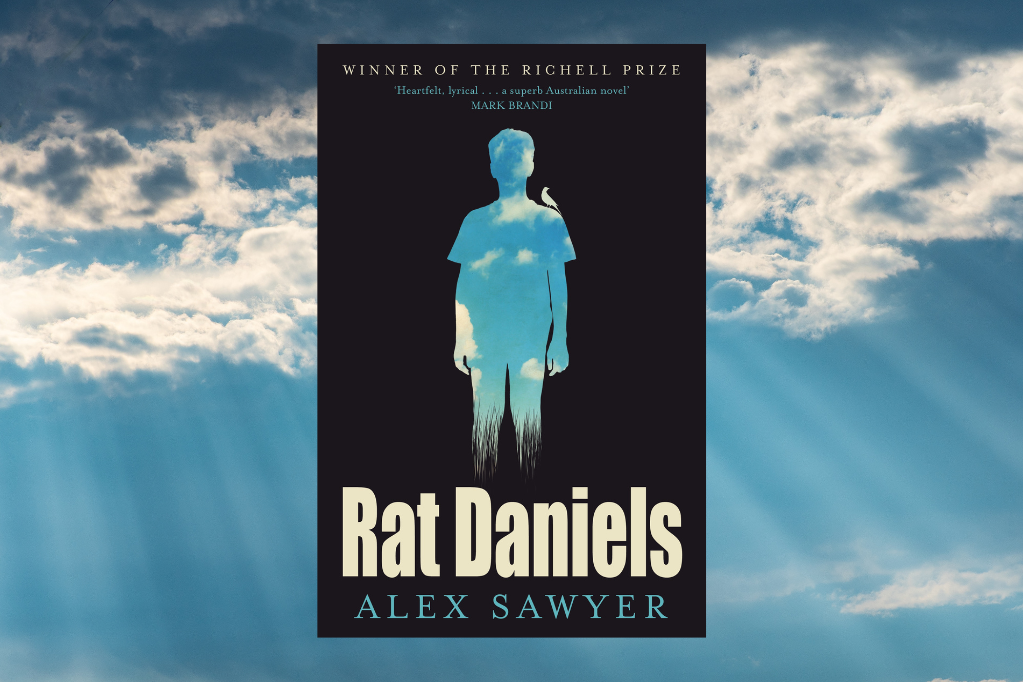
‘A Dog’s Life’ first appeared in New Australian Fiction 2024.