Sometimes we stop. To look.
Sometimes, an image breaches the unspoken agreement entered into with all the others – that we see them as surfaces, as memories, that we accept that what we are looking at only exists now behind a frame of glass or paper. Every now and then, one of them makes us pause. Our eyes are used to taking in everything without seizing on anything; this eases their task, allows them to rest. Sometimes we stop. To look.
And then the vast rooms of the museum release the space hinted at by the photograph, the growl of the sea intrudes more and more, bringing with it fragments of a northern land that is as unknown as it is familiar, of some white void that might be carried like an island within us all. There might be a lake, a glacier, fir trees and reindeer, then fewer and fewer trees, nothing but the cold and the light.
Things have changed scale; the image now takes over the room. The beginnings of a story seem to be hidden within it, something spills out from it, something unfinished, the outline of narratives to be rewritten, working backwards, since the image has just become the new point of departure.
The eye is a photographic plate which is developed in the memory. There are other images to be found, somewhere there, between lens and imprint.
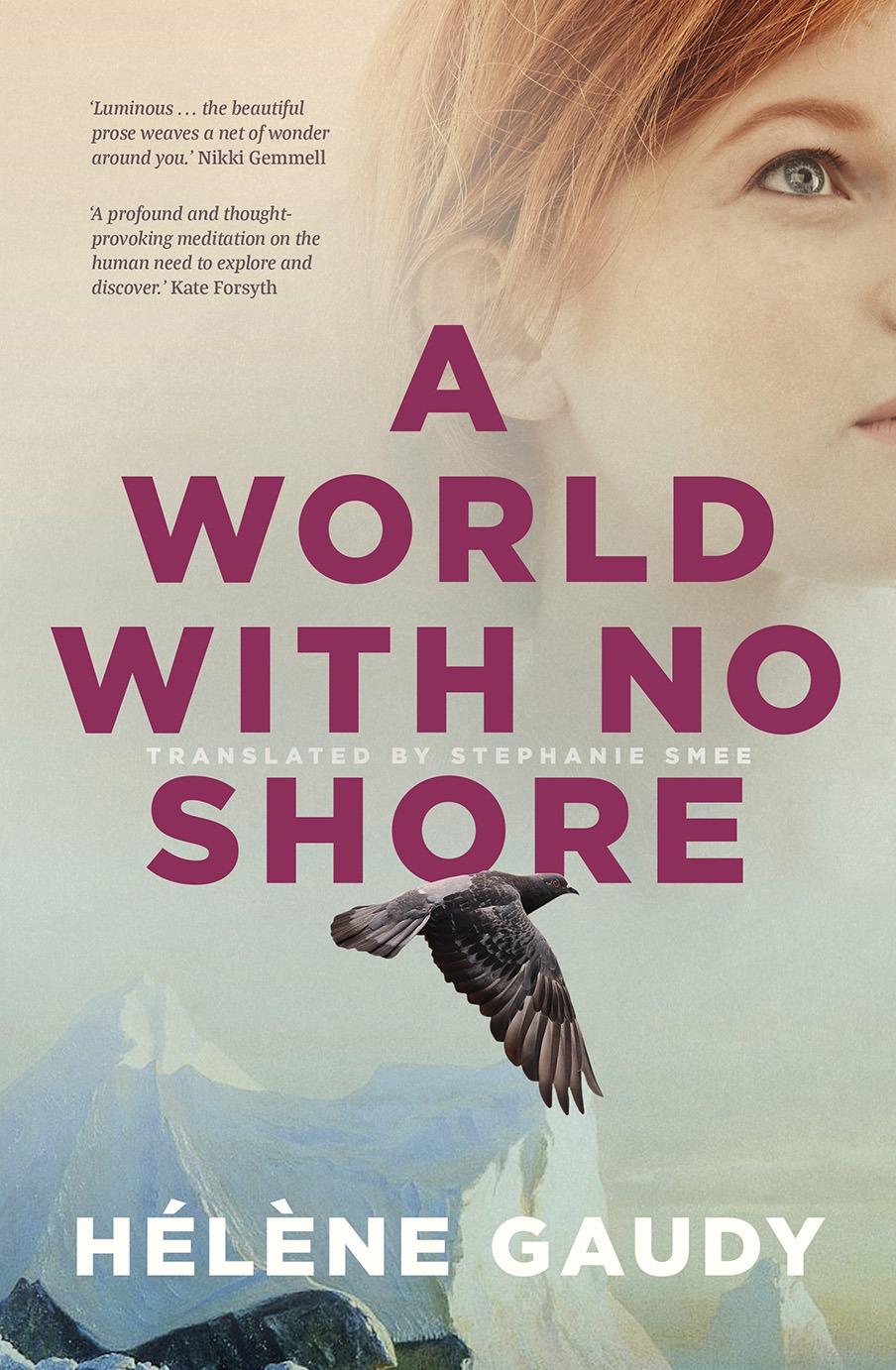
This is an extract from A World With No Shore by Hélène Gaudy, translated by Stephanie Smee and published by Black Inc. A World With No Shore is available now at your local independent bookseller.