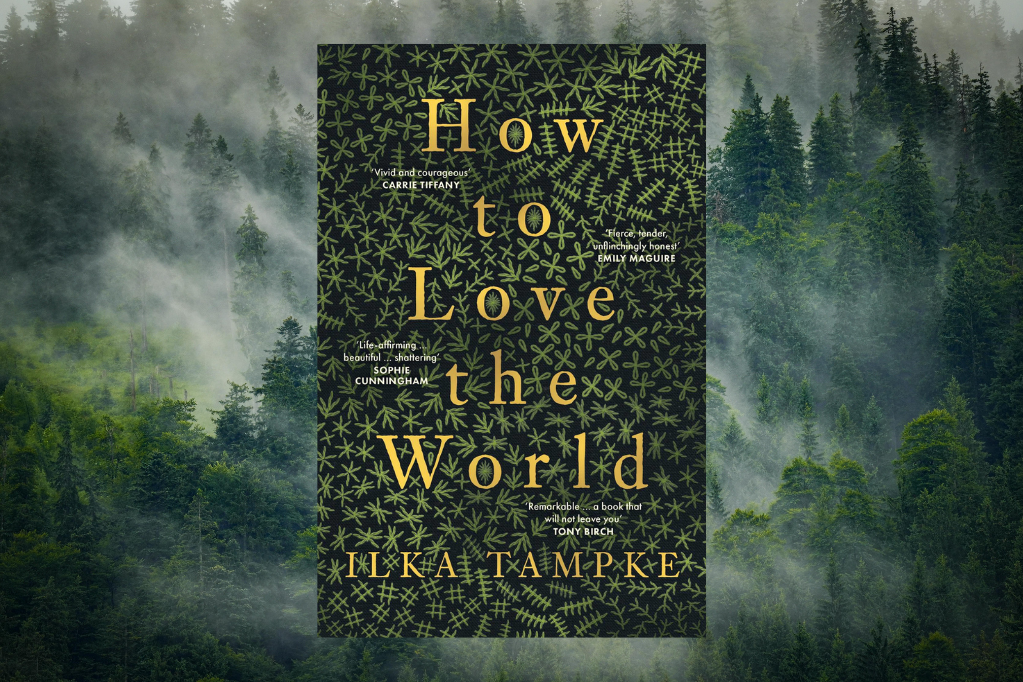
Anyone who’s wandered into a bookshop or scrolled through BookTok lately will have noticed a new breed of novel. Think covers featuring steaming bowls of ramen, libraries and a lot of cats. They belong to a dreamy wave of East Asian literature in translation that promises ‘respite from this increasingly stressful world’. Tales that chronicle ordinary lives in charming urban spaces—places where the protagonist might be sipping tea in one hand and clutching a jazz record in the other.
One forebear of these warm, contemplative tomes is Nobel Prize-winning author Haruki Murakami. These novels evoke his trademark blend of magical realism, existential loneliness, loss and self-discovery but spice them up with contemporary issues, carving out a genre I’ve dubbed ‘Asian cosy lit’.
While Murakami’s protagonists tend to be men caught in liminal spaces, waiting for the universe to reveal its mysteries, these trending titles shift the perspective. Exhibit A: Miye Lee’s Dallergut Dream Store, a runaway bestseller of 2024, where dreams are commodities, neatly packaged and sold in bustling department stores, offering patrons (and readers) an escape from reality. Or Toshikazu Kawaguchi’s Before the Coffee Gets Cold, a slim volume translated from Japanese by Geoffrey Trousselot. Set in a quaint backstreet cafe, customers are offered a magical brew and the fleeting chance to revisit their past—so long as they finish before the coffee cools. This unassuming book became the bestselling translated work of 2023 according to Nielsen BookScan. It’s also morphed into a publishing juggernaut, with an additional four books in the series. For readers like me—burned out on hyperrealism and the grit of contemporary fiction—these stories felt like a literary balm.
Anyone who’s wandered into a bookshop will have noticed the rise of a new breed of novel.
Not long ago, the landscape had a decidedly different vibe. Outside of a few breakout exceptions—Mo Yan, who won the Nobel Prize in Literature in 2012, or Yu Hua—translated East Asian fiction remained on the fringes of English-language publishing. When I was a teenager, reading literary outliers like Banana Yoshimoto and Haruki Murakami made me feel like a goddamn rebel; now, they’re so canonical you’ll find them in Kmart.
Subscribe to stay in the loop
Be the first to read new stories, discover publishing opportunities, and access resources. For people who love great writing.
It’s not the first-time national literatures have hit the global spotlight. Latin American magical realism (think Jorge Luis Borges and Gabriel García Márquez) had its heyday decades ago, followed by a bout of South Asian diasporic fiction (Salman Rushdie and Rohinton Mistry). But now, the literary zeitgeist seems firmly rooted in Japan and Korea. And according to Jane Lawson, deputy publisher at Penguin Books UK, while each literary tradition is obviously distinct, they’ve been bundled together under the monolithic (and arguably reductive) label of ‘East Asian literature’. Initiatives like the International Booker Prize have propelled this phenomenon, with recent shortlists spotlighting Korean novels like Cheon Myeong-kwan’s Whale and Bora Chung’s Cursed Bunny. Han Kang’s recent Nobel Prize in Literature win and Korean government-backed translation efforts have further cemented this rise in popularity and represents a long-overdue correction to the dominant monoculture of English-language literary publishing.
But today, as I observe how crowded the bookshop shelves are with these titles, I can’t help feeling a bit suspicious. As heartening as it is to see diverse voices celebrated, I wonder if their initial charm morphed into something aggressively commodified? As Mark Davis observed in a still-relevant 2006 article for HEAT, selection and marketing processes hold significant power in shaping perceptions of literary works, with publishers making decisions based on what trends and sales figures deem culturally significant. This curation not only determines which voices are amplified but also how they are framed for Western audiences. Trending East Asian works—Japanese and Korean writing in particular—are marketed as ‘quiet’ or ‘contemplative’, which has led to their placement within the expansive, often nebulous category of ‘literary fiction’. As translator Anton Hur notes when discussing the genre’s popularity, this catch-all label, though prestigious, speaks to a broader issue: the way translated literature is marketed and consumed in English-speaking markets.

Nowhere is this more evident than in the aesthetic choices that surround these books, which according to Alison Fincher, who runs the Read Japanese Literature website and podcast, are ‘heavily curated’. Think bold colours, clean typography and kitsch covers that sit pretty on an Instagram grid. Quaint settings and minimalism are emphasised, perhaps to align with Western perceptions of ‘authentic’ or ‘cute’ East Asian culture. It’s safe. It’s palatable. It’s homogenising. This risks making East Asian literature seem over-saturated with cats or quirky storefronts—more of the same, rather than the expansive, evolving field it is.
It’s safe. It’s palatable. It’s homogenising.
Of course, even the books with ‘soft’ and ‘quirky’ covers have thematic cores that hit hard. Kawakami’s Breasts and Eggs, for example, with its various pink covers, is at first glance a quiet portrait of three women in Tokyo. But beneath scenes spent watching TV, snacking on gyoza and drinking canned beer lies a sharp exploration of gender inequality, societal pressure, agency and the intersections of class and identity—fitting for a writer who has directly challenged Japan’s most influential contemporary author on his representation of women.
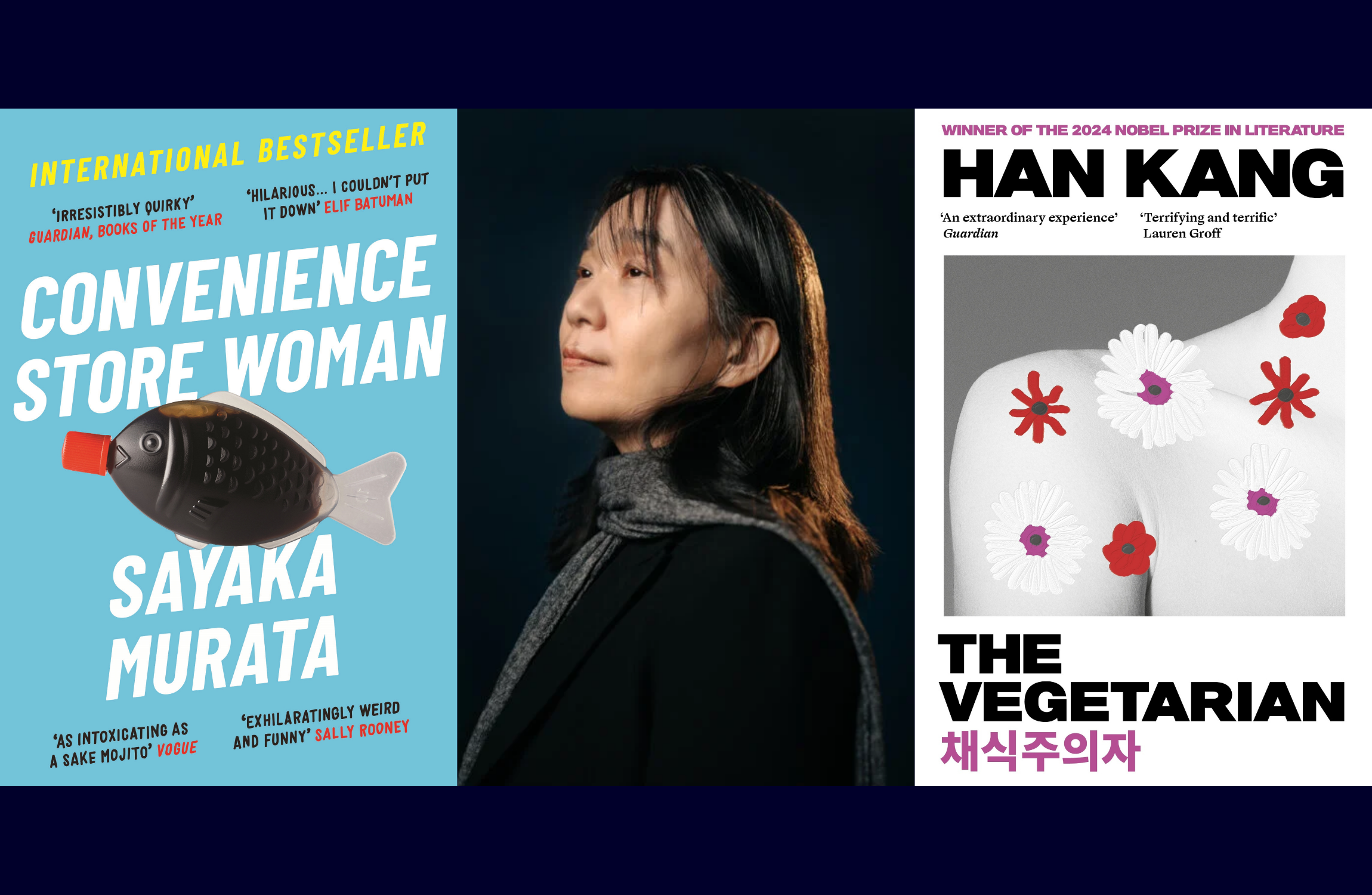
Similarly, female authors like Sayaka Murata and Hang Kang continue to push the boundaries of genre and tone, reshaping what literature can say and who gets to tell the story. Few do it with as much deadpan subversion as Murata, whose Convenience Store Woman follows Keiko Furukura, a thirty-six-year-old woman who has worked in the same Tokyo convenience store since she was eighteen. To society, she’s an oddity—single, childless and indifferent to climbing any professional ladder. Her family and friends pity her, urging her to fix herself and get married. But Keiko refuses. The store, with its rules and routines, is where her quirks are not just tolerated but valued. Even when she invites a male co-worker to move in, it’s purely practical, though she lets others believe it’s the relationship they’ve been pushing for—for Keiko, he’s more pet than partner. Meanwhile, Kang’s experimental writing interrogates Korea’s history, as outlined by Yung In Chae in the Yale Review, ‘[acting] as a conduit for the memories of generations that suffered state violence’. The Vegetarian, translated by Deborah Smith—the first Korean novel to win the International Man Booker Prize—explores human violence through Yeong-hye, a woman who suddenly decides to stop eating meat after a series of dreams involving animal slaughter. It’s unsettling and surreal, and this story—meditative, centred on the life of one woman—can also be read as a political allegory.
These authors reject Western conventions of dramatic arcs and instead capture the contradictions of contemporary life—our longing for connection, the emotional grey zones. Most importantly, they largely avoid heavy-handed moralising, opting for restrained, elliptical storytelling that feels inclusive rather than prescriptive.
This approach likely speaks to a new generation of readers—perpetually online, emotionally conscious and fatigued by binaries. Murata’s work doesn’t convince you to climb professional ladders, while Hiromi Kawakami’s The Nakano Thrift Shop offers a subtler exploration of love and connection. In Kawakami’s novel, the protagonist, Hitomi, doesn’t experience grand epiphanies or sweeping transformations. Rather the story finds its emotional core in small, tangible shifts in perspective—changes that feel far more relatable to contemporary readers. These narratives, rooted in quiet rebellion, are about life’s smaller moments.
But what happens to the novels that don’t conform to this subtle narrative or the carefully curated, cosy aesthetic? Selective framing distils East Asian literature into oversimplified categories, often obscuring its depth and diversity—especially when a work doesn’t fit neatly under one aesthetic or narrative style. I still find Yōko Ogawa’s The Memory Police, for instance—a melancholic, Orwellian tale about state surveillance and erasure—in the literary fiction section despite its alignment with science fiction. This mislabelling not only diminishes the richness of its genre roots (a Japanese horror is no less a horror because it’s Japanese) but also risks alienating readers who might otherwise seek it out. Japanese literature, for instance, extends far beyond cosy lit, boasting entire sub-genres of samurai epics, suiri shōsetsu or ‘detective fiction’ (like Soji Shimada’s The Tokyo Zodiac Murders) and mangas. Meanwhile, Korean authors, both at home and in diaspora communities, produce an array of genres and forms from dystopian novels to subversive webtoons.
Selective framing distils East Asian literature into oversimplified categories.
Yet, despite this diversity, many genres—romance, horror and short story collections—remain underrepresented in translation on Western bookshelves, as John Self points out in the Guardian. This imbalance is of course driven in part by Western market preferences that favour certain tropes over others. The same pattern plays out locally too. As Olivia Khoo discusses in ‘Marketing Asian-Australianness’, regardless of how ‘nonmimetic, experimental, subversive, or avant-garde’ these writings may be, they are often marketed and received in the West as representations of fixed cultural identities such as ‘Japanese’ or ‘Korean’. Additionally, Simone Lazaroo’s ‘Not Just Another Migrant Story’ highlights the ongoing expectation for Asian Australian writers to commodify their ethnicity and identity, often being pigeonholed into autobiographical narratives.
These dynamics raise important questions about how translated literature and diaspora literature is produced, marketed and consumed. Too often, the focus shifts from the books themselves and towards the statement they make—cosmopolitanism, curiosity, a rejection of cultural insularity. There’s that cynicism again. But this framing can have an erasing effect—something Indonesian writers warned against when their own national literature was having a ‘moment’ driven by Anglophone translation. As Tiffany Tsao wrote in 2019 in ‘Why Are Indonesians Being Erased from Indonesian Literature?’:
I have become increasingly horrified at the multiple layers of gatekeeping that distort the Western world’s impression of Indonesian writing […] Foreign work needs to be foreign in familiar ways—exotic enough to give the reader satisfaction about foraying into another country or culture without overwhelming or alienating them. It’s like crafting the perfect tourist experience. Unfamiliar yet comfortable. Orientalizing, not disorienting.
‘Orientalising, not disorienting’ sums up the aesthetic marketing pull of cosy lit to Western audiences. On one hand, these highly popular novels can act as gateways to a broader range of writing. On the other, they risk flattening complex traditions into a marketable sameness, reinforcing an illusion of diversity while limiting its scope.
But as with all trends, this one is bound to evolve. It’s telling that Butter by Asako Usuki, a satirical crime novel, topped the 2024 charts—a statistical anomaly, according to Nielsen Bookscan in the UK. The book’s success is reminder that East Asian literature isn’t confined to being ‘cosy’ or ‘gentle’. These works are far richer and more multifaceted than the labels often assigned to them (including the very one I’ve interrogated here), revealing something profoundly human: that we’re all a little flawed, a little strange—and that’s okay. Even so, I’ve got a Korean novel with ‘bookshop’ in the title with my name on it. But rest assured, my TBR pile has plenty of other stories ready to be cracked open.